
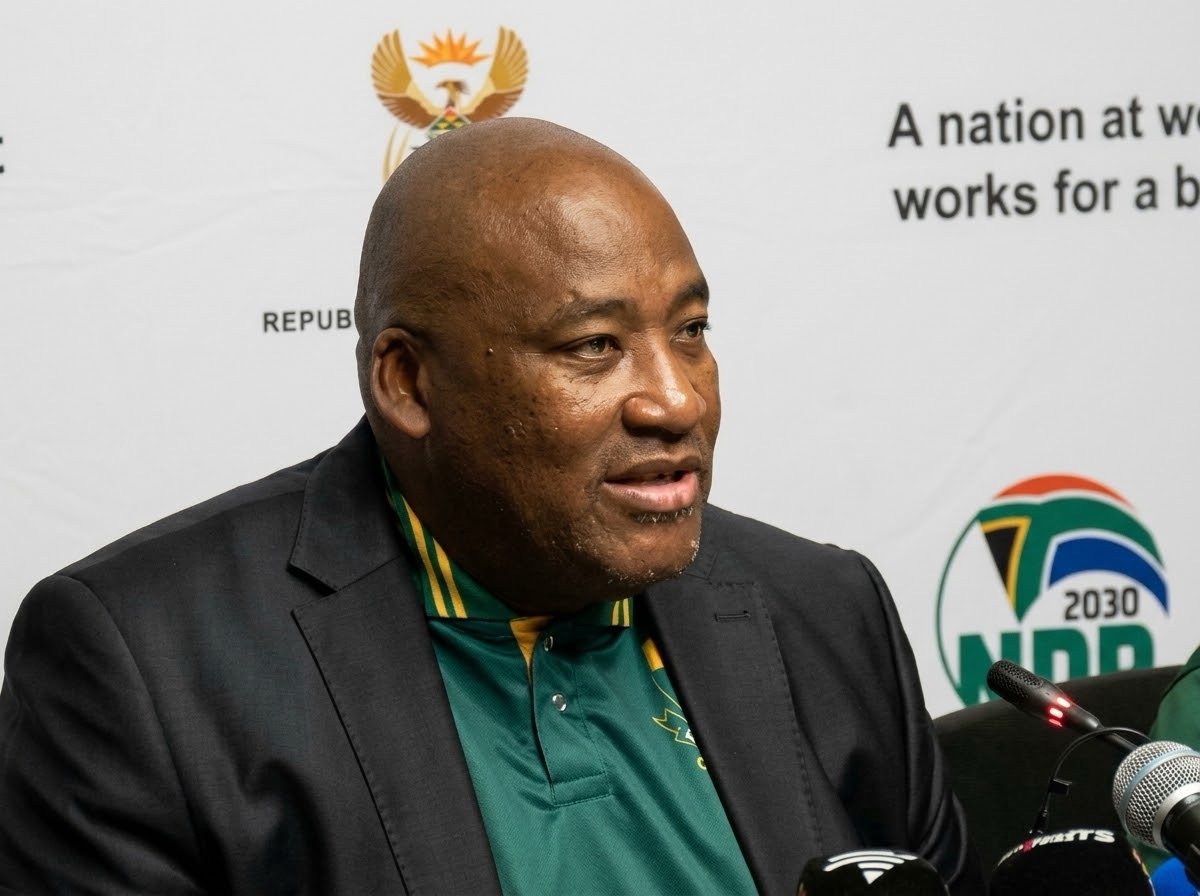
Sports, Arts and Culture Minister Gayton McKenzie has apologised to Olympic swimming champion Tatjana Smith over her treatment by Swimming South Africa (SSA), saying she was made to feel like an “enemy of the country” despite everything she had achieved for South Africa.
McKenzie addressed the controversy during a media briefing on Tuesday, 17 November 2026, following Smith’s announcement that she would represent the Netherlands in the next chapter of her swimming career.
The minister said Smith’s Olympic achievements would always remain part of South Africa’s sporting history, stressing that the country did not own her and that she was entitled to make decisions about her future.
His comments come amid growing criticism of Swimming South Africa following its dispute with the four-time Olympic medallist over prize money, sponsorship arrangements and the treatment of athletes.
Minister questions Swimming SA’s treatment of Olympic champion
McKenzie expressed concern over the way the federation handled Smith’s dispute following the 2023 World Aquatics Championships in Fukuoka, Japan.
Smith won gold in the 200m breaststroke and silver in the 100m breaststroke at the championships, earning a combined US$35,000 in prize money.
However, Swimming South Africa withheld the money for more than a year following a dispute involving the federation’s technical sponsor, Arena, and Smith’s personal sponsorship arrangements with Speedo.
Smith had competed in Speedo equipment despite the federation’s prescribed Arena kit requirements. The dispute resulted in the federation threatening disciplinary action and a substantial fine.
The prize money was eventually paid following legal intervention. Swimming South Africa later acknowledged that withholding the money should not have happened and apologised.
McKenzie questioned the basis on which Smith had been threatened with a fine, particularly amid concerns that there was no signed sponsorship agreement with the swimmer requiring her to wear Arena equipment and that no proper disciplinary hearing had taken place.
The minister’s criticism has added pressure on the federation to explain how its sponsorship arrangements were applied and whether athletes were treated fairly.
SASCOC asked to investigate Swimming South Africa
McKenzie said he had asked the South African Sports Confederation and Olympic Committee (SASCOC) to investigate Swimming South Africa amid concerns about its treatment of athletes.
The intervention comes as the federation faces wider scrutiny over its administration, athlete support and sponsorship arrangements.
Smith’s dispute has also raised questions about the relationship between national sporting federations and athletes who depend on personal sponsorships to finance their careers.
Her legal representatives have previously sought access to the agreement between Swimming South Africa and Arena through a Promotion of Access to Information Act request. The federation has cited confidentiality and commercially sensitive information in its response to requests for the agreement.
The details of the sponsorship arrangement remain a key issue in the dispute, particularly whether athletes receive sufficient benefits when required to wear a federation sponsor’s equipment.
South Africa does not own Tatjana Smith
Despite the controversy surrounding her departure, McKenzie said Smith’s achievements could never be erased from South Africa’s sporting history.
The minister had previously stated that her decision to represent the Netherlands was personal and should not be turned into a political weapon.
Smith announced her decision on 10 November, explaining that she wanted to pursue the next chapter of her swimming career with the support and opportunities she believed would allow her to thrive.
She is one of South Africa’s most decorated Olympic athletes, having won gold and silver medals at both the Tokyo 2020 and Paris 2024 Olympic Games.
McKenzie said those achievements would remain part of the country’s history, regardless of which nation she represents in future competitions.
Who is responsible for funding South African athletes?
The minister also addressed the broader question of financial support for athletes competing internationally.
McKenzie maintained that national sporting federations are primarily responsible for securing the resources needed to run their sporting codes, including attracting sponsors and raising revenue to fund international participation.
He argued that although the Department of Sport, Arts and Culture provides funding to federations, those organisations operate independently and are responsible for managing their own affairs.
The minister said government could not be expected to cover every cost associated with international competition, placing responsibility on federation leadership to build sustainable funding arrangements.
However, the debate has intensified following reports of South African athletes facing financial difficulties when selected to represent the country at international events.
Smith’s departure has therefore become part of a much wider conversation about athlete welfare, sports administration and the financial structures supporting elite sport in South Africa.
McKenzie’s request for SASCOC to investigate Swimming South Africa now places renewed attention on the federation’s leadership and its relationship with the athletes it represents.






Leave a Reply