
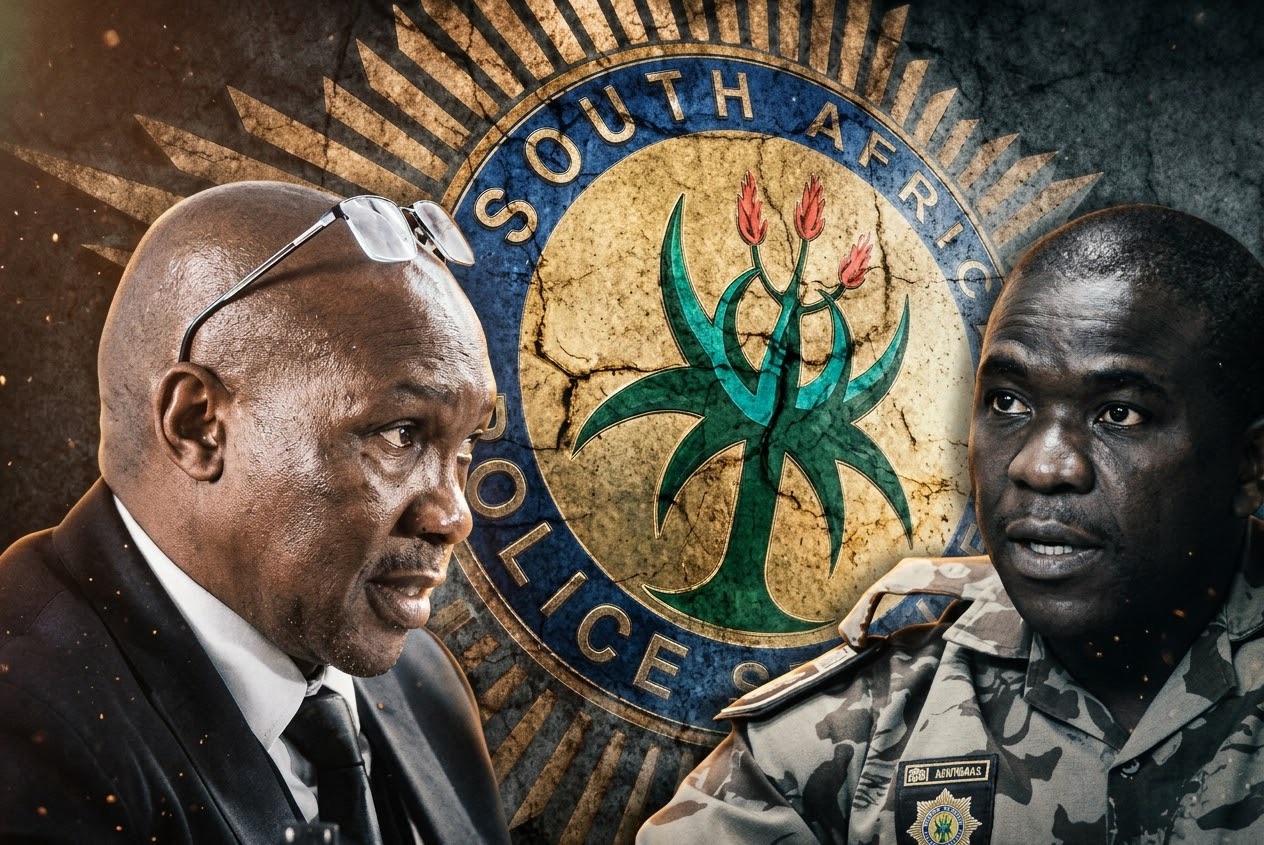
The expected appearances of Lieutenant-General Nhlanhla Mkhwanazi and Lieutenant-General Dumisani Khumalo could bring some of the Commission’s most complicated issues into sharper focus.
Both officers occupy important positions in South Africa’s policing environment, but the Commission’s evidence has already exposed serious disputes about investigations, intelligence operations, the handling of information and the treatment of senior police officials. Khumalo’s arrest and the investigation that preceded it have been a major part of the inquiry. Mkhwanazi, meanwhile, has been a central figure in the wider controversy surrounding policing and alleged interference.
The interesting issue is how their evidence will connect with testimony already heard from former IDAC head Andrea Johnson, investigators and intelligence officials. The Commission has previously heard allegations that the investigation involving Khumalo may have suffered from procedural problems. It has also heard testimony questioning how certain statements were obtained and whether the correct legal processes were followed.
This creates an important investigative opportunity: compare the original allegations that led to the investigation with the evidence now being presented about how that investigation was conducted. Who supplied the information? Who verified it? Who authorised the next steps? Were there competing accounts inside the security structures? And can the documentary record establish the sequence?
There is another issue that deserves attention. If senior officials give different accounts of meetings, intelligence operations or instructions, the Commission will have to determine whether those differences are genuine failures of memory, misunderstandings or something more serious. A contradiction is not proof of wrongdoing, but it can identify exactly where further investigation is needed.
These appearances could help the Commission establish whether the conflict was simply about individual officials or whether deeper institutional divisions had developed within the country’s security structures.
The real story may not be who had the loudest allegations. It may be whose version survives when the documents and timelines are put side by side.




Leave a Reply