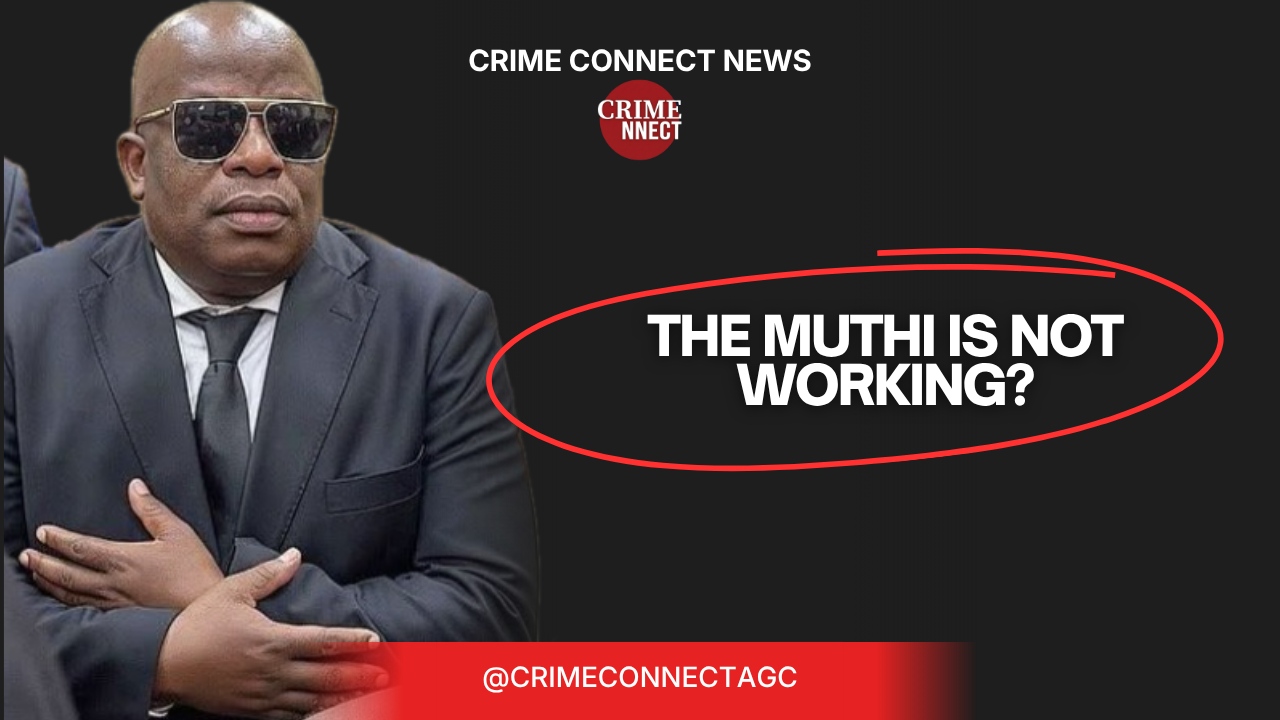

Taxi boss expected to face evidence on Monday after Commission rejects request to wait for High Court challenge
25 September 2026 | 20:52
PRETORIA — The Madlanga Commission of Inquiry has rejected taxi boss Oupa “Bafana” Sindane’s application to postpone proceedings against him, ruling that evidence concerning him will proceed on Monday, 28 September 2026.
The decision brings an end, for now, to a dramatic postponement battle that has involved ill health, hypertension, a pending High Court challenge and an unusual reference to a period of “sacred spiritual seclusion”.
Sindane’s legal team had asked the Commission to delay his appearance until after his High Court application is heard on 6 October, arguing that it would be unfair for evidence concerning him — including cellphone material — to be presented while he was unable to participate.
The Commission was not persuaded.
It has ruled that Sindane’s evidence must proceed on Monday “in whatever format”.
The postponement that triggered a bigger battle
Sindane was scheduled to appear before the Commission on Wednesday, 23 September.
Instead, his legal team arrived with a multi-layered application asking that his appearance be postponed.
Three issues were placed before the Commission.
The first was medical.
His lawyers produced a medical certificate indicating that Sindane was suffering from uncontrolled hypertension and was not considered fit to properly follow the proceedings.
The second was far less conventional.
His lawyers told the Commission that Sindane was undergoing a period of “sacred spiritual seclusion” connected to his traditional and spiritual beliefs.
The third was a legal challenge that Sindane had launched in the Pretoria High Court against the Commission’s subpoena and its use of material obtained from his cellphone.
The sangoma and spiritual-seclusion angle
It was the spiritual-seclusion explanation that immediately stood out.
Sindane’s lawyer, Advocate Thabani Masuku, told the Commission that his client was undergoing a private spiritual process that he considered important to his identity and wellbeing.
The lawyers did not disclose the precise nature of the process.
Masuku argued that Sindane had deliberately kept those details private and that his decision not to reveal the intimate aspects of the spiritual process should not result in a negative inference against him.
The argument was essentially that Sindane was not simply refusing to attend the Commission.
His legal team said he was simultaneously involved in a traditional spiritual journey, described as a period of sacred seclusion.
Some reports have described this in terms of Sindane consulting or engaging in a traditional-healing/sangoma process. However, the specific rituals, treatment or purpose of that process have not been publicly disclosed, and there is no reliable basis to speculate about exactly what he was doing while away from the Commission.
What is on record is that his lawyer presented the spiritual seclusion as a serious cultural and personal matter.
‘We should not force’ spiritual seclusion
Masuku argued that spiritual seclusion should be respected and that the fact that Sindane had chosen not to reveal the private details of the process should not be held against him.
The defence maintained that the matter was connected to Sindane’s personal and cultural identity.
That argument placed an unusual question before the Commission: how should a subpoenaed witness’s private spiritual obligations be weighed against an inquiry operating under a strict timetable?
For the defence, the answer was that Sindane should be given time.
For the Commission, the timetable could not simply be allowed to drift.
Then came the medical certificate
The spiritual argument was accompanied by a medical issue.
Sindane’s lawyers submitted a medical certificate citing uncontrolled hypertension.
The defence argued that the question was not merely whether Sindane was physically ill, but whether he was in a condition to properly understand, follow and respond to evidence being presented about him.
Masuku questioned whether it would be meaningful to lead evidence involving his client if Sindane was unable to follow the proceedings or give instructions to his legal team.
Interestingly, the Commission’s chief evidence leader, Advocate Matthew Chaskalson SC, did not dispute the medical certificate.
He accepted that the medical evidence indicated Sindane could return by Monday, 28 September.
That became important in the Commission’s eventual handling of the dispute.
The High Court challenge
But the postponement application was not only about Sindane’s health or spiritual retreat.
It was also tied to a separate legal battle.
Sindane has approached the Gauteng High Court in Pretoria, challenging the Commission’s subpoena and seeking to prevent it from using certain material obtained from his cellphone.
The application is scheduled to be heard on 6 October 2026.
His lawyers argued that allowing the Commission to present the disputed material before the High Court had considered the matter could cause prejudice that might not be capable of being reversed later.
The cellphone material is important because evidence leaders have indicated that WhatsApp communications involving Sindane form part of the material the Commission wants to examine.
Evidence leader: Commission cannot wait indefinitely
The evidence leaders opposed the postponement, particularly the attempt to wait for the High Court proceedings.
Chaskalson argued that Sindane’s High Court challenge had been launched very close to the date on which he was due to testify.
He characterised the resulting urgency as “self-created urgency”.
The evidence leader also stressed the limited time available to the Commission.
The inquiry is working towards the conclusion of its public evidence phase, and the evidence leaders have repeatedly warned that delays could make it difficult to complete the Commission’s work within its lifespan.
Chaskalson had previously argued that the Commission could not simply give substantially more time to witnesses who did not appear.
The ‘empty chair’ problem
The dispute created an unusual situation.
Sindane was subpoenaed to appear.
He did not take the witness stand.
But the Commission still had evidence concerning him that it wanted to put on record.
Chaskalson had proposed that documentary evidence could be led in Sindane’s absence so that the Commission did not lose the hearing day.
Sindane’s lawyers objected.
They argued that presenting evidence about him while he was absent would leave him unable to immediately respond, explain context or instruct his lawyers.
The defence described the possibility as creating a one-sided presentation of evidence.
Commission says Monday is the day
The postponement battle has now been settled — at least at the Commission level.
The application has been dismissed.
Sindane’s evidence is scheduled to proceed on Monday, 28 September 2026.
The Commission has indicated that the evidence will proceed “in whatever format”, leaving open the precise procedural form that Monday’s proceedings will take.
That means the legal fight has not necessarily ended.
Sindane still has his High Court application, which is scheduled for 6 October.
But unless a court intervenes before then, the Commission intends to continue with the evidence concerning him.
What the Commission wants from Sindane
Sindane was issued a Rule 10.6 notice by the Commission in August.
A Rule 10.6 notice does not mean a person has been found guilty of anything. It alerts a person that evidence before the inquiry may implicate them and gives them an opportunity to respond.
The Commission wants Sindane to answer questions relating to alleged networks and associations in the taxi industry.
Some of the evidence concerns his relationship with fellow taxi boss Madoda “Joe Ferrari” Sibanyoni and communications between the two men.
The Commission has also been examining material relating to alleged criminal networks and the so-called Kwagga 20.
These remain allegations and matters under investigation by the inquiry. Sindane has not yet given his evidence before the Commission.
Why Monday matters
Monday could become one of the more closely watched days of the Commission’s current phase.
Sindane has not yet had the opportunity to answer the evidence that has been raised about him.
His lawyers have argued that he should be given the opportunity to respond properly and that his constitutional rights should be protected.
The evidence leaders, meanwhile, maintain that the Commission cannot allow procedural disputes to bring its work to a halt.
Now, with the postponement application rejected, the Commission has chosen to move forward.
And Sindane’s High Court challenge will continue in parallel.
WHAT WE KNOW
Witness: Oupa “Bafana” Sindane
Commission: Madlanga Commission of Inquiry
Postponement application: Dismissed
Next scheduled evidence: Monday, 28 September 2026
High Court application: 6 October 2026
Medical issue cited: Uncontrolled hypertension
Spiritual issue cited: Period of “sacred spiritual seclusion”
Legal challenge: Sindane is challenging the Commission’s subpoena and aspects of its use of cellphone material
Status of allegations: Not findings of guilt; matters remain subject to the Commission’s inquiry and relevant court proceedings
THE BIG QUESTION
After days of arguments about health, spiritual seclusion and a High Court challenge, the Commission has now made its position clear:
The evidence will not wait.
On Monday, the attention turns back to the witness the Commission has been trying to hear from — Oupa “Bafana” Sindane.
And this time, the Commission says his evidence will proceed “in whatever format.”
🕒 ARTICLE INFORMATION
Published: 25 September 2026
Updated: 25 September 2026
Time: 20:52 SAST
Location: Pretoria
Category: Madlanga Commission | Crime & Courts | Investigations
Reporter: Crime Connect Newsroom
⚖️ LEGAL NOTE
The Madlanga Commission is an inquiry and not a criminal court. References to allegations, associations or evidence before the Commission should not be interpreted as findings of guilt. Sindane remains entitled to respond to evidence concerning him, and his separate High Court challenge remains pending.





Leave a Reply